142nd Edition
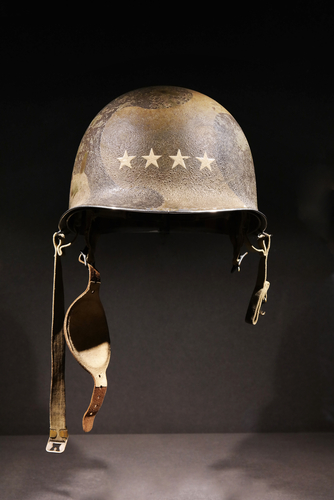
The Three Greatest American Generals in WWII
First and foremost, I feel completely inadequate to select the three greatest American Generals from WWII. Those who are the most qualified fall into two groups. The first are noted historians and authors who have spent careers researching and studying the war. Several of my favorite authors include Steven Ambrose, Flint Whitlock, John McManus, Ian Gardner, Carlo D’Este, and Charles MacDonald.
The second group are those that served with the generals. Those who were actually there at the time and who have written firsthand accounts of the battles that decided the outcome of the war. There are hundreds of these, perhaps thousands. These five have had a profound impact on me and are wonderfully written:
1. “As ever, John” by John McNally – This book is a compilation of letters written by John McNally to his sister, Peg, from December 1941 through the end of the war. McNally served in the 82nd Airborne Division.
2. “Easy Company Soldier” by Don Malarkey. The biography of Sgt. Don Malarkey who served in the 10st Airborne’s 506th Parachute Infantry Regiment, made famous in the series “Band of Brothers.”
3. “Nancy Wake – The White Mouse” An autobiography of one of the bravest woman spies in WWII, who helped thousands of allied soldiers evade capture and reach safety.
4. “The Fool Lieutenant” by Marcia Moen and Margo Heinen – The personal account of Lieutenant Robert Edlin who served in the Second Ranger Battalion, landing in Normandy on D-Day
5. “Where the Birds Never Sing” by Jack Sacco – The True Story of the 92nd Signal Battalion and the Liberation of Dachau.
So, combining these two sources, here are my humble selections for the three greatest American Generals in WWII.
The first is George C. Marshall. Here is an excerpt from the book “Bitter Victory – The Battle for Sicily, 1943” written by Carol D’Este about General Marshall.
“No single American was more responsible for organizing and guiding the United States’ war effort to victory than this modest man who was the heart and conscience of the United States Army. Marshall commanded universal respect for his leadership and vision which guided the Army through an immensely complex transition from a pathetically ill-equipped, inadequate peacetime force to the mighty war machine that eventually numbered nearly eight million men in the Army and Army Air Forces. Both as Army Chief of Staff and as Brooke’s counterpart as chairman of the US Chiefs of Staff, Marshall was at one and the same time no less than the most powerful and most modest military figure in American military history.”
The choice as to who would be the Supreme Allied Commander in Europe came down to Dwight Eisenhower and George Marshall. At the time, many felt Marshall deserved it more than Eisenhower, but ultimately President Roosevelt chose Eisenhower because he needed Marshall’s diplomatic, political, and strategic wisdom, plus he wanted to keep Marshall close to him as America’s role and responsibility in the war expanded. Most historians felt Marshall could have pushed harder for the role of supreme commander, but selflessly he took one for the team and accepted his role as Combined Chief of Staff.
The second is Major General James M. Gavin, commander of the 82nd Airborne Division.
Here is an excerpt from the book “As Ever, John” by Lieutenant John McNally about General Gavin.
“In all of our airborne drops, the first man out of the plane is always the General himself! All of the thousands of men who crouch in the door of a plane, ready to leap into the roaring, flak-filled night know that someone else was down there before them. Imagine the terrific morale factor of the simple, stark facts: the General jumps first!… “When he talked, every man felt drawn into the company of the elect who, for the space of a breath, risked their lives a thousand feet above the ground. When he finished, he needed only to lift a finger and say, “Follow me,” and there wasn’t a single man who wouldn’t have followed him straight to hell.”
General Gavin led the 82nd Airborne troops in four major campaigns: Sicily, Salerno, Normandy, and the Netherlands. Remarkably, he was first out of the door in each historic jump. Great leaders know the way, show the way, and go the way. This philosophy was epitomized by Gavin. He rose from 505th Regimental Commander in Sicily to the 82nd Airborne Division Commander and was the commander of all US forces in Berlin at the end of the war.
I highly recommend these two autobiographies of General Gavin: “On To Berlin” and “Gavin at War.”
My third pick is General Robert Frederick.
Frederick was chosen by General Eisenhower to create and train the Army’s first Special Service Force. He fought side by side with some of the most highly trained soldiers in the U.S. Army. Frederick was wounded eight times, was always in the thick of battle fighting at the front, and sometimes praying at the side of one of his wounded men. In 551 Days of combat, Frederick was decorated with twenty-eight U.S. medals and six foreign medals. (source: “The Last Fighting General” by Anne Hicks)
Churchill said of Frederick, “If we had a dozen men like him, we would have smashed Hitler in nineteen forty-two.” At the age of 36 Frederick became the youngest general in the U.S. Army’s ground forces.
Here is an excerpt from an outstanding biography of General Frederick by Anne Hicks called “The Last Fighting General.” (This is from a story written by Frederick Painton for the Washington Post).
Battle toughened soldiers had tears in their eyes. The men wanted to know where he was going, so as to transfer to be under him. He shook his head – he couldn’t tell them. But he said he expected them to go on fighting not as Yanks or Canadians, but as North Americans, upholding the tradition of the best damned combat outfit in existence. He turned to smartly salute the only North American flag in existence, and the men openly now wept as their proved leader, beloved by them, climbed into his staff car, and with one last proud look as Force, drove off.”
Final thought… every single American who served in WWII, from general to private, will always be a hero to me. They answered the call at the world’s most desperate time, when freedom hung in the balance. At that same tender age, would I have had the courage to do the same? That unanswerable question will linger in my mind forever, a reminder to be thankful to those whose sacrifice provided the life I enjoy today, and as a warning, that freedom is never free.
Please help me grow my readership by forwarding this to a friend(s). In the meantime, stay tuned for my next newsletter. Thanks!
Michael Kayes
*These views are my personal opinions and are not the viewpoints of any company or organization.