164th Edition
Ben Hogan and our body of work
I’m envisioning two books about a particular historical event. The first one concentrates on everything that went wrong and the second focuses on everything that went right. Obviously, these stories would be very different. The same point would hold true for any biography. The only fair way to evaluate history is to include both sides, and for an individual to include that person’s entire body of work. Surely, it is fair to highlight certain failings, as well as notable accomplishments. But again, including both is important to establish the credibility of any conclusions postulated about an event or individual.
History has a way of softening our viewpoint of people and events. Not in all circumstances but generally speaking. Over time we gain perspective and perhaps are less impacted by emotional public opinion. A clearer, more objective view of the event or person tends to emerge. All this is a good thing.
But until history sorts through the good and the bad, before perspective and time tempers emotional bias, we often struggle to fairly assess a situation or individual. In our never-ending-soundbite world and addiction to social media, we are quick to judge and form conclusions. It takes way too long to evaluate issues comprehensively and rarely do we include the body of work of an individual before we form an opinion about them. Worse over, we tend to believe that everything negative about a situation or person is true, while we tend to be skeptical about positive developments. In many ways, I fear, we have become a glass half empty nation.
What should we do about it? Is the solution as simple as just being mindful how important it is to stop and think before firing off a tweet or Facebook post? How often do we pause to consider alternative viewpoints and underlying motivations? Perhaps a discipline of incorporating the TKN test before we formulate and share our opinions would be helpful: Is what I am about to say true, kind, and necessary?
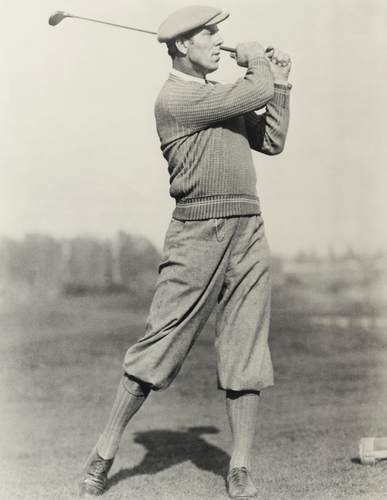
Recently, I watched a very interesting video about legendary golfer Ben Hogan. In many experts’ opinions he was one of, if not the, greatest ball strikers of all time. He also had the reputation of being stern and ice cold. To understand Hogan, one has to understand his entire life. Raised dirt poor, undersized, and bullied as a young boy, Hogan developed a drive and work ethic that were truly remarkable and became the foundation of one of the greatest careers the game of golf has ever known. Later, Hogan served in WWII. In 1949, in the prime of his career, he survived a horrific car accident. All these aspects of Hogan’s life are critical to understanding who he was and to put in perspective all that he accomplished.
Every person has a story and a history that shapes who they are. In a similar vein, every situation has a story and a history that impacts how it unfolds. The how and the why are just as important to ponder as the what. It takes time to piece together the complete story. Are we in too much of a rush today to include the how and the why?
Pick your favorite famous person. Maybe your hero as a kid. If you look closely, you will uncover their flaws hidden below their extraordinary accomplishments. Keep digging and you will discover the how and the why. Now do the same for a famous person you despise. Is it possible you might uncover an admirable quality? Maybe the how and why will provide a different perspective.
We can do this exercise with people who aren’t famous, too. As I have said many times, we are all connected. We all matter to God. A God who offers all of us grace and forgiveness despite, not because of, our body of work.
Please help me grow my readership by forwarding this to a friend(s). In the meantime, stay tuned for my next newsletter. Thanks!
Michael Kayes
*These views are my personal opinions and are not the viewpoints of any company or organization