148th Edition
Making Progress?
I’ve been thinking a lot about whether our society is making progress. My initial premise was that yes, we have in some important ways, but no we haven’t in others. I’ve tried to be objective about this, as unemotional as possible, which isn’t easy to do these days. So here goes.
The time frame I’ve used is approximately the last 50 years. How society functioned when I was in high school compared to how it functions today. Obviously, the time frame matters, but for the purposes of today’s blog I’m comparing the mid 70s and early 80s to the last few years. I’ve decided to focus on four specific areas: How neighborhoods function, the quality of K – 12 education, the economy and financial markets, and the expanding role of technology. This blog will focus on the first two, neighborhoods and schools. These comparisons are totally based on my personal experience. For whatever that is worth…
Neighborhoods:
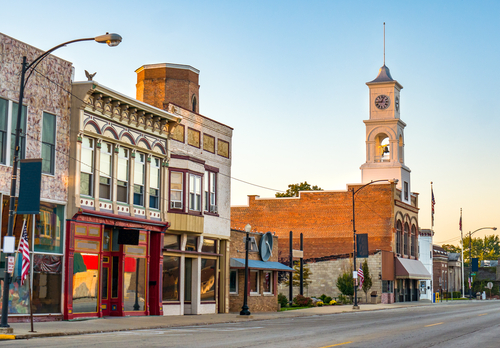
In my neighborhood there were no alarm systems, very few fences, dogs ran unleashed, and few people locked their doors. Through high school I never had a key to our house. I had a good friend whose family left a key in a boot beside the backdoor. We all used it, sometimes remembering to return it to its hiding place. Neighbors kept an eye out for each other. Parenting was a group effort, and grown-ups never hesitated to let any kid in the neighborhood know when he was out of line. When out of sugar or flour or any other staple, children were sent to the neighbors to borrow what was needed. Milk and eggs were delivered, the pharmacist made house calls, and children played largely unsupervised. In the evening, the whole family listened to the likes of Walter Cronkite, who was followed in later years by Tom Brokaw and Peter Jennings. On Sunday we all went to church, even if we didn’t want to.
What has changed since and is it progress? Today, in my neighborhood, virtually everyone has an alarm system, and doors are kept locked even when people are home. Most homes have remote cameras and fenced yards. Leash laws are strictly enforced. It is not uncommon for people to live next door for years without ever stepping foot in their next-door neighbor’s house. Families conjugate on private back decks in place of less private front porches. Kids begin structured activities at a very early age and are supervised at all times. Everything we need gets delivered, sometimes the same day we order it. The news flow is completely different. In place of Cronkite and Brokaw, we have influencers, talking heads, and social media pundits. Parents tend to mind their own business and refrain from parenting any other kids. Mistrust and the threat of getting sued isn’t far from anyone’s mind.
Is this an accurate assessment? What have I missed? Do you think we have we made progress or not?
Schools:
The only year I didn’t walk to school was kindergarten. During 1st through 6th grade, a bunch of us walked together to L.W. Bills Elementary School, over a mile away. It was a blast. Sometimes in grades 4th – 6th we rode our bikes. That was fun, too. Other kids rode the bus every day, which was also a blast for us non-bus riders, as we got to throw snowballs at the bus in the winter months. Most parents were not intimately involved with what occurred in the school. There was no need for them to be involved. Principal Betty Jean Repp ruled the school with an iron hand, and as I realized by 6th grade, a loving heart. She kept us in line but inspired many of us to study hard and do the right thing. Everyone took PE and it was a daily battle. Dodgeball, foot races, and strenuous physical activities dominated the curriculum. It was a blast.
We said the Pledge of Allegiance to start every day. Every single one of us stood and honored the flag during the National Anthem.
In high school, our gymnasium would be standing room only for basketball games, and half the town would attend Friday night football games. Our school did not offer lacrosse or soccer, and there were more sports for boys than there were for girls. Virtually all coaches played the sport in which they coached. My classroom experience was lackluster at best. Virtually every student, including myself, cheated. Very few were serious students. Mentors were rare. I knew one boy who graduated despite the fact he couldn’t read. How sad was that? Bullying occurred every day, drugs and alcohol use were common.
How are schools different today? Over the past three decades I’ve served in various public and private schools as a coach, substitute teacher, and once as an athletic director. A few observations:
With Title IX, girls have more athletic opportunities, which is a major positive. However, schools, generally speaking, continue to miss an enormous opportunity to teach life lessons and build character through sports, by not focusing on participation rates, as I have written about many times. Coaches, in some of the non-major sports, have little or no personal experience actually playing the sport they are trying to coach. Lack of skill on their part translates into a lack of respect on behalf of the players, hence mentoring opportunities evaporate. Discipline in schools has declined, kids get second chances when they underperform often due to their own laziness. Grade inflation is an issue. In the age of technology and remote learning, kids are significantly more tech savvy. Homeschooling is available, and the variety of school options has expanded. Parents, generally speaking, are more involved with their kid’s education. Unfortunately, so are bureaucrats.
When it comes to our schools, have we made progress or not? Perhaps it is a mixed bag. Surely there is room for improvement. Here are a few ideas to make more progress in the all-important area of educating the next generation.
1. Integrate athletics more broadly into the overall education experience.
2. Return faith, morality, and civic duty to the school curriculum.
3. Adapt history curriculum to include an in-depth study of the lessons from WWII.
4. Increase merit-based teacher pay.
5. De-emphasize the role of the Department of Education and move decision making to the local and state level.
What else can we do? Next, we will take a look at the Economy and Markets and Technology. That might actually take two blogs. We shall see. Stay tuned.
Please help me grow my readership by forwarding this to a friend(s). In the meantime, stay tuned for my next newsletter. Thanks!
Michael Kayes
*These views are my personal opinions and are not the viewpoints of any company or organization.