154th Edition
The Greatest Generations
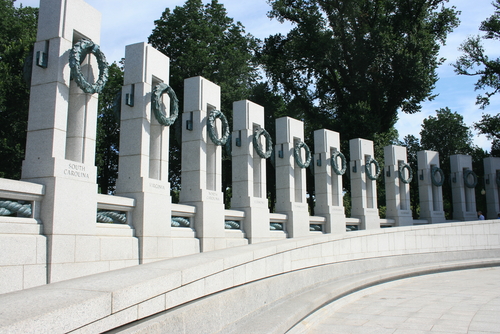
Tom Brokaw, noted author, historian and network television anchor, coined the phrase The Greatest Generation when referring to the generation that fought and won WWII, then returned home and built the most powerful economy in the history of the world. Given those two momentous accomplishments, it is hard to argue with that moniker.
At the same time, a case can certainly be made that the Greatest Generation came nearly two hundred years earlier at the founding of our nation. Warren G. Harding, the 29th President of the United States, is credited with first using the term “The Founding Fathers” to describe the likes of Washington, Adams, Jefferson, and Franklin, to name only a few of the courageous men who led the rebellion against the Crown and subsequently led the creation of our Republic.
My point in this blog is not to make the case that one of these generations was greater than the other. I prefer to think of them as the Greatest Generations. I don’t see how any serious study of history can arrive at any other conclusion. During each of these historic periods, men and women showed incredible bravery and fortitude, sacrificing everything, in many cases even their very lives, for their country. We owe all of them an eternal debt of gratitude.
Today, we celebrate President’s Day, the 4th of July, and Veterans Day, and well we should. But are we doing enough to honor these men and women? I’m not so sure.
As I interact with young people from middle school to high school, it is increasingly apparent that the knowledge of history, covering both historic periods, is woeful. Why are we not teaching our younger generations the important life lessons from these two pivotal eras in our nation’s history?
When it comes to the Founding Fathers, it is well known that there are certain factions that would like to rewrite history. Others are intent on removing the names of Jefferson and Washington from schools, public parks, and buildings because these men were slave owners. Is this the right thing to do? In doing so, will we still be able to judge each man for his body of work during his lifetime? Or will we allow the stain of slavery to wipe out everything else Jefferson and Washington accomplished, and for every sacrifice each made for our country?
I haven’t come across any coherent argument why the lessons of WWII shouldn’t represent a core of the history curriculum in middle and high schools. The leaders it produced, like Churchill and Eisenhower, the industrial miracles made possible through a partnership between government and big business, and the moral and ethical dilemmas from the Holocaust to Hiroshima, all seem too important not to study and debate. Yet, when I ask students basic questions about WWII, they invariably can’t answer any of them. Their knowledge base is almost nonexistent. In my mind this is a national tragedy. What can we do about it?
Worst of all, what happens to our country if we forget our Greatest Generations? Will we ever produce another one? It would seem highly unlikely. It puzzles me that there seems to be so many people who seem intent on degrading our history and accomplishments, while elevating our shortcomings. In coaching, I’ve always used the philosophy, if you don’t ever praise, you have no right to criticize. What is motivating so many people to do the former but not the latter?
Criticism without praise reeks of bias, if not some lurking evil intent. I’ve never known criticism to result in inspiration, and greatness is seldom strived for, let alone achieved, without it.
At some point in the future, our country will undoubtedly face another defining challenge. At that moment, will that generation become the third Greatest Generation? Without knowledge and understanding of the past, will they want to? If so, will they even know how?
From a civic perspective, there are prerequisites to achieving greatness. Foundationally, one has to embrace a mindset that elevates service to others above self-interests. One must accept the fact that he belongs to something beyond himself. Lastly, one has to understand that to whom much has been given, much is expected. My sense is that having a strong faith in God would produce each of these essential characteristics in abundance.
Absent a strong faith, our future of producing greatness when it is desperately needed, as we have done throughout our history, is uncertain. The potential repercussions of falling short are downright harrowing.
Please help me grow my readership by forwarding this to a friend(s). In the meantime, stay tuned for my next newsletter. Thanks!
Michael Kayes
*These views are my personal opinions and are not the viewpoints of any company or organization.